
.avif)

The Traffic Lights System: a guide to nutrition misinformation on social media

A recent study by Dublin City University and MyFitnessPal found that only 2.1% of nutritional content on TikTok is accurate when compared to public health and nutrition guidelines. This alarming statistic highlights a pressing need for better digital health literacy. But how does misinformation about nutrition work, and why is it so widespread?
Misinformation is broadly defined as the unintentional sharing of false, inaccurate or misleading information. Depending on the context, misinformation might spread more or less easily and will have different ramifications. Nutrition misinformation comes with its own specificities, making it particularly prone to the fast spread of misinformation.
One reason is that nutrition affects people directly and personally, which increases vulnerability to misleading information. On social media, it’s easy for almost anyone to proclaim themselves an expert, especially in fields like nutrition, where online courses can get you a certificate over just a weekend. A confident delivery, generally combined with a fit appearance, is more likely to get engagement and inspire trust than the more nuanced and less definitive advice offered by qualified professionals.
Not only is nutrition misinformation abundant, it also spreads very quickly. This is partly because the messaging might resonate emotionally, making it even more challenging to distinguish between sound advice and misleading information. The following traffic lights system will help you identify patterns of misinformation and better navigate the world of online nutrition advice. The aim of this traffic lights system is to show how nutrition misinformation works. Despite what one might expect, it rarely consists of blatant lies (although this can happen too). Most of the time, there is an element of truth that the public can identify with, represented by the ‘green’ light. This ‘green’ content, however, isn’t isolated and gets coated with misleading and sometimes dangerous information. While this might sound daunting, similar patterns appear over time; being aware of those patterns can really help to spot and counter misinformation:
GREEN: Generally True Information
Definition: This is information that most people agree on. It’s either based on well-established evidence or common sense and is unlikely to be disputed.
Example: "Eat real food; it’s better for you than ultra-processed food."
Why It Matters: Even though this is strictly speaking accurate, and cutting down on ultra-processed foods is in line with health recommendations, it can easily be framed in a way that can be detrimental, where certain foods are banned or called dangerous. This type of message is generally coated with other information, which is more problematic.
ORANGE: Oversimplified or Misleading Information
Definition: This is misleading information which tends to result from oversimplifications, because of jumps to inaccurate or false conclusions. A scientific mechanism might be used to support an argument, but then get oversimplified or taken out of context, leading to misleading conclusions.
Example: Seed oils contain high levels of linoleic acid, which gets converted into arachidonic acid and leads to inflammation. AVOID ALL SEED OILS!
Why It Matters: This type of message, especially as it gets repeated, can easily fuel unhealthy attitudes towards food and fails to take into account the bigger picture of a balanced diet. These oversimplifications often contradict research findings and yield a false picture of how nutrition works. As everything gets oversimplified, social media users are often faced with conflicting advice, leading to more confusion.
RED: Misleading or Dangerous Information
Definition: Posts spreading misinformation rarely merely point out that ‘real food’ is good for you or that you’d be better off avoiding this or that product. Over time, they also fuel distrust in experts, discourage followers from taking advice from professionals, and dismiss important recommendations.
Example: "Everything you’ve been told about healthy fats is a lie. They only want you to get sicker so they can push Big Pharma’s agenda."
Why It Matters: This type of misinformation can be particularly dangerous because it undermines trust in qualified professionals and evidence-based health advice. It can lead people to make decisions that are not only ineffective but potentially harmful to their health. These arguments tend to be made to fit an influencer’s prescribed diet, which often comes as THE solution to all sorts of problems.
Final Take Away
In a digital world where misinformation spreads faster than facts, being aware of these patterns can help you to be more critical. It is also important to note that algorithms on social media work in such a way so that users end up seeing more and more of the same type of content. This can easily distort reality, making it seem like the proportion of people who thrive on a particular diet is much greater than it really is, for example. Misinformation can then become even harder to spot.


Examining Paul Saladino's response to Sir David Attenborough's claims on meat sustainability
Let’s now move to Saladino’s second claim, that eating more meat would also support optimal health.
Claim 2: “What we have in our country and in our world is not a deficiency of calories. We have a deficiency of nutrients. And the way that humans can most easily get nutrients, vitamins and minerals, is with animal foods.”
Saladino then concludes in his post caption: “Humans need to eat MORE meat, not less…”
The claim lacks context. Let’s dig deeper, first looking at the global context and then more specifically at the picture of nutritional deficiencies in America.
- The global context: The way the claim is phrased implies that meat (along with other animal foods) is the solution to a global problem: nutritional deficiencies. Saladino points out that while we might think nutritional deficiencies are associated with low calorie intake, that is not always the case: the real issue lies with getting the right nutrients. Malnutrition is an increasingly complex issue that does not have a single, straightforward answer, partly because it affects people differently around the world. It is important to note that malnutrition due to food insecurity remains a huge burden in large parts of the world. In other cases, malnutrition can be due to the poor quality of the food consumed (rather than low calorie intake), leading to micro-nutrient deficiencies, which can cause irreversible damage. This is referred to as Hidden Hunger, and it affects over two billion people worldwide. It is also possible to suffer both from obesity and malnutrition. This is a growing issue known as the “double burden of malnutrition.” But is the answer to these issues ‘more meat’?
- Evidence: To support the argument that humans need to eat more meat for optimal health, Saladino here references research pointing to the greater bioavailability of certain vitamins in animal-based foods compared with plant-based foods. Bioavailability refers to the proportion of a nutrient that is absorbed and utilised by the body.
- Verification and implications for combatting nutritional deficiencies: The evidence does support higher bioavailability of certain nutrients found in animal-based foods, but this does not entail that the answer to nutritional deficiencies lies with more meat. Both animal-based and plant-based foods have their own set of advantages and limitations in terms of nutrient bioavailability. Recommendations to tackle worldwide deficiencies mainly rely upon diet diversification, fortification and supplementation, and education and policy. In fact, research shows that increasing dietary diversity might be the most effective way to alleviate malnutrition. In the American context, emphasising the benefits of whole plant-based foods is an integral part of the fight against nutrient deficiencies. We will see why now.
- The American context: If we focus on the United States, where Paul Saladino is located, the suggestion that the U.S. has a nutrient deficiency that can be solved by increasing animal food consumption does not hold up against current dietary patterns (see graph below) or nutritional science. While animal foods do provide certain nutrients, the U.S. already consumes a high amount of meat, and the real deficiency lies in the consumption of fruits and vegetables. Increasing the intake of these plant foods would address nutrient deficiencies more effectively and promote better overall health.
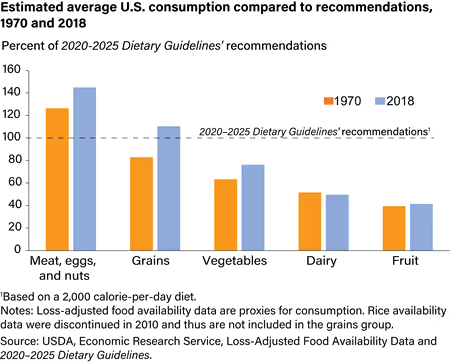
Research supports the health benefits of increasing plant-based food intake, pointing to decreasing risks of various diseases as animal sources of protein, especially processed and red meat, get replaced with plant sources of protein within U.S. cohorts. In particular, consumption of red meat tends to overly exceed recommended amounts (Source: Rust et al., 2020). When Saladino suggests that we need more, not less meat, it’s important to put things in context: what kind of meat? more meat than what? and to replace what? In the American context, the claim goes against evidence that people already tend to consume too much meat, especially red and processed meat:
“Many Americans are not reaching micronutrient intake requirements from food alone, presumably due to eating an energy-rich, nutrient-poor diet. About 75% of the US population (ages ≥1 year) do not consume the recommended intake of fruit, and more than 80% do not consume the recommended intake of vegetables. Intakes of whole grains are also well below current recommendations for all age groups, and dairy intake is below recommendations for those ages 4 years and older. The 2015-2020 Dietary Guidelines for Americans highlighted the nutrients that are underconsumed in the US population, i.e., "shortfall nutrients," labeling a few as "nutrients of public health concern" because low intake may lead to adverse health effects: Vitamin D (adverse health effect: osteoporosis), calcium (osteoporosis), potassium (hypertension and cardiovascular disease), dietary fiber (poor colonic health), and iron (anemia in young children, women of childbearing age, and pregnant women) were such labeled. Other nutrients, including vitamins A, C, and E; choline, and magnesium, were identified as also being underconsumed by the US population.” Source: Victoria J. Drake, Ph.D, Oregon State University.
The reasoning that more meat will lead to better health because it is nutrient-dense is based upon an incomplete picture, as it fails to take into account the flip side of the coin, particularly in the United States which is among the top meat-consuming nations:
There is also a flip side which cannot be ignored. While there can be a benefit to eating a certain amount of meat, there can also be harms from eating too much of some types of meat.” (Coburn 2021: 152)
Numerous studies have pointed to associations between a higher consumption of processed and red meat and increased risks of developing cardiovascular diseases as well as certain cancers. It is important to note that both the degree of exposure and the type of meat consumed affect that risk, hence recommendations to particularly reduce one’s consumption of processed and red meat.
Final Take Away
Recognising the nutritional value of animal products should not detract from the important recommendation to reduce meat consumption, particularly red meat, and other animal-based products. Interestingly, the advice to particularly reduce consumption of red meat seems to serve both matters of sustainability and health. At a time when change is quickly needed, broad recommendations to the public that go directly against national guidelines can cause confusion and contribute to undermining trust in experts.
We have contacted Paul Saladino to ask for comments and are awaiting a response.
A shift towards plant-based diets would, therefore, not only free up pasture land; it would also reduce the amount of land needed globally to grow crops to feed livestock. Nicholas Carter explains that besides freeing up over 75% of farmland, this shift would also have the efficiency gain to feed 3.5 billion more people (Source: Cassidy et al., 2013).
Beyond the direct uses of land that we’ve discussed so far (to raise and feed livestock), it is also important to keep in mind that there are further, indirect consequences to using up land for animal agriculture. The environmental impacts of meat production are indeed multifaceted, and Saladino’s argument undermines the role played by animal agriculture in driving deforestation and biodiversity loss, which in turn fuels the climate crisis:
Attenborough's recommendation is informed by research showing that if the world stopped consuming animal products, we would reduce the amount of land used for agriculture by 75% (comparable to an area the size of North America and Brazil). This is of course a hypothetical scenario used to inform research, and should not be confused with the more realistic recommendation to cut down on animal products.
Saladino’s interpretation of Attenborough’s argument appears to involve a Straw Man Fallacy, misrepresenting the original point about reducing (rather than eliminating) meat consumption to address environmental issues. This difference might seem small enough, but it makes it easier to dismiss Attenborough’s recommendations, which can end up appearing misguided.
Paul Saladino says that “the contention that the planet cannot support more meat-eaters is false.” Why? According to his first claim, most of the land used to graze cattle is unsuitable to grow crops. Let’s analyze the evidence provided to support this claim and fact-check its implications for sustainability.
- Evidence cited: The first paper quoted by Saladino to support this claim has nothing to do with the conversion of land used for grazing cattle to grow crops. Instead, the study referenced argues that the current method of assessing greenhouse gases (using GWP100) misrepresents the impact of short-lived pollutants like methane. Methane is a short-lived but highly potent greenhouse gas compared to carbon dioxide. According to the researchers, the current method can lead to inaccurate assessments of global warming potential because it equates short-lived gases to long-lived gases like CO2 over a 100-year period, ignoring their different atmospheric lifetimes. Now what would this mean if we were to increase meat production to accommodate more meat eaters, which Saladino suggests would not be unsustainable? According to the research he is quoting, any sustained increase in methane emissions would substantially contribute to future warming, adding to the current climate crisis.
- Verification of the claim: Other studies and reports from environmental organizations and agricultural experts corroborate the claim that most of the land where cattle are grazed would be unsuitable for plant agriculture. One study, for example, estimated that 65% of the land used for grass for grazing cattle is not suitable for growing crops.
- Implications for sustainability: To imply from this claim that current levels of meat consumption and production are sustainable overlooks many significant concerns and ways in which animal agriculture uses up land. Environmental researcher Nicholas Carter refers to this argument as the “marginal land myth.”
What is marginal land? Marginal land is land that has little or no agricultural value. This might be because it is unsuitable for food production, due to soil quality or other physical characteristics. The “marginal land myth” focuses on the unsuitability of (some) grazing land to grow crops but overlooks issues such as efficiency in the context of food security or the impact on biodiversity. According to Nicholas Carter,
“The contribution of non-arable (marginal) ecosystems to food security is insignificant when turned into pasture that provides less than 2% of global calories while racking up massive social and ecological costs (Source: Union of Concerned Scientists, 2012).”
So how might reducing meat consumption help to alleviate these ecological costs?
Firstly, let’s remember that at least one third of grassland could also be used as cropland (Mottet et al., 2017). Secondly, by unit of protein, most livestock feed is actually human edible (Berners-Lee et al., 2018). Even when only counting feed edible by humans, all livestock, including cows, still use more human-edible protein than they produce in the United States (Baber, Sawyer, & Wickersham, 2018) and globally (Berners-Lee et al., 2018). This is also true by unit of calorie, zinc and iron.
Globally, 42% of pastureland used to be forested or at least woody-savannas (Searchinger et al., 2018).
Besides, just because some land grazed by cattle may not produce food for humans and can be considered marginal, it's not marginal for the wildlife it displaces, including some key ecosystem species like wolves or countless small mammals. So even though some of the land is marginal, returning it to nature is a far better choice for carbon drawdown and wildlife biodiversity.
Cross-check facts: Remember to compare information with multiple trusted sources to confirm accuracy, especially when it seems to contradict established guidelines.
In a video posted on May 16, 2024, Paul Saladino, MD, formerly known as ‘Carnivore MD,’ challenges Sir David Attenborough's recommendation for dietary shifts, made on the basis that "if we all had a largely plant-based diet, we would only need half the land we use at the moment." While Sir David Attenborough argues that "the planet can't support billions of large meat eaters," Saladino disagrees and supports his own position through two main claims:
Claim 1: “In the United States right now, 85% of the land where cattle are grazed cannot even support plant agriculture, it’s either too rocky too steep or too dry.”
Claim 2: “What we have in our country and in our world is not a deficiency of calories. We have a deficiency of nutrients. And the way that humans can most easily get nutrients, vitamins and minerals, is with animal foods.”
While it's true that much grazing land in the U.S. is unsuitable for crops, this does not mean current meat consumption levels are sustainable. The full environmental impacts of dietary shifts must be considered. Broad recommendations to 'eat more meat' to decrease nutritional deficiencies are unsupported by evidence that Americans are consuming more meat than ever before. Enhancing and facilitating the consumption of whole grains, fruits, and vegetables would diversify our diets and be more effective in alleviating nutritional deficiencies.
The claim that eating less meat will rob you of essential nutrients seems to be completely at odds with the recommendation to cut down on animal products, both for sustainability and health reasons. Framing the issue as a simple either/or question doesn't lead to meaningful debate and tends to cause more confusion. To fully understand the basis of Sir David Attenborough's recommendation, it is important to look at the big picture of meat production in the world.

“Plants are toxic!” Are oxalates destroying your health?
Dr. Goldfarb’s Advice on Oxalates in the Diet
In his interview on Nutrition Made Simple, Dr Goldfarb, who is a double-board certified nephrologist and internal medicine specialist, and responsible for running the kidney stone prevention programme at NYU, gave his advice for oxalates in the diet.
He advised that if you have experienced kidney stones before, to eat less of foods containing high levels of oxalate. However in most cases, you don’t need to remove it completely.
If you have not experienced kidney stones before, with or without a family history of kidney stones, you don’t need to worry about the oxalate content of your foods.
In every case, it’s important to stay hydrated and get enough calcium. This is because high fluid intake lowers the concentration of calcium, oxalate, uric acid, and phosphate in urine and is crucial in lowering the risk of kidney stones. Studies also show that higher calcium intake is associated with lower levels of kidney stones.
Claim 3
“When you dump [oxalates], you’ll experience burning when you have a bowel movement, your skin will get really powdery, you’ll get what feels like sand coming out of the corners of your eyes, and in your nose, you’ll feel really tired, you could get join inflammation.”
Fact-check
This claim is not supported by scientific evidence. The idea of "oxalate dumping" and its associated symptoms primarily comes from anecdotal reports rather than research. There is no evidence in scientific literature to suggest that these symptoms occur as a result of reducing oxalate intake.
In his interview with Dr. Carvalho on Nutrition Made Simple, Dr. Goldfarb stated that he has not observed such effects in any of his patients and considers it highly unlikely in individuals with healthy kidney function.
Claim 4
“Oxalates are really high in spinach, in potatoes, sweet potatoes, chard like swiss chard, chocolate, tea, beets.”
Fact-check
It’s true that foods like spinach, potatoes and swiss chard contain high levels of oxalates, but this does not mean these foods should be avoided. Very few foods are super high in oxalates; they are mainly high in spinach and chard, while most foods, including other greens such as kale, are not. Consuming large amounts of spinach, particularly in forms like smoothies where you can ingest large volumes at once, can increase the intake of oxalates. But again, this doesn’t mean spinach isn’t safe to eat. Calcium intake is crucial, as it helps mitigate the risks associated with oxalates and kidney stones.
On the contrary to how the claims in Candi’s video can be viewed, plant foods are actually associated with lower risk of kidney stones. An analysis of 1,322,133 participants and 21,030 cases across different studies found that fruit, vegetable, and fibre consumption is associated with a lower risk, while meat consumption is associated with higher risk of kidney stones.
Dr. David Goldfarb, Nephrologist, MD said “More fruits and vegetables is generally good, a plant-based diet is a good idea for kidney stone prevention.”
Recently, Candi Frazier, also known as The Primal Bod on Instagram, posted a reel claiming that oxalates in foods have harmful effects on our health. She made statements such as “Oxalates create a lot of inflammation in our body” and “They act like fiberglass in our tissue!”
What are oxalates?
Oxalates are naturally occurring compounds found in various foods, including leafy green vegetables, beans, and nuts. They are a component of certain types of kidney stones (calcium-oxalate stones). For most people, it’s safe to consume oxalate-containing foods, but those with a history of kidney stones or who are at risk may want to moderate their intake. Influencers are increasingly claiming that oxalate-rich foods are harmful and should be avoided.
Let’s fact-check the claims made by Candi Frazier.
Claim 1
“Your body will make calcium oxalate stones and they’ll deposit in your kidneys, but you can also have gallstones that are oxalate related, pancreas stones, tonsil stones. Any stones are typically from oxalate toxicity.”
Fact-check
This claim is misleading due to the certainty with which it is stated. While calcium oxalate kidney stones can form in some people who consume oxalates, most people safely excrete oxalates without forming stones. Factors such as the concentration of oxalate and calcium in the urine, urine volume, and the presence of other substances that may prevent or promote stone formation influence whether stones form.
Moreover, not all types of stones are typically caused by oxalates. For example, gallstones are primarily composed of cholesterol or bilirubin, and a diet high in fat or cholesterol can contribute to their development.
Claim 2
“Everyone is usually loaded in oxalates because you’ve been eating them for long periods of time.”
Fact-check
This claim is also misleading. Most people with normal kidney function, or even those with kidney stones, do not have high levels of oxalate in their blood. The body usually manages to excrete oxalate efficiently.
“This is in rare cases with people as a result of conditions such as primary hyperoxaluria, it’s highly unlikely to occur in individuals with healthy kidney function who are consuming oxalates in their diet, as you should just excrete it.”
Source: Oxalates & Kidney stones | Dr. David Goldfarb, MD | Nutrition Made Simple
Look for evidence: Reliable claims should be backed by scientific studies or data.
On February 6th, 2024, Candi Frazier aka theprimalbod published an instagram reel making claims about the range of effects oxalates can have on our health, with the caption stating “Oxalates shouldn't be a big deal, but when you never take a break from them (i.e. you are not living in harmony with the seasonal cycles of vegetables), they may form crystals and eventually stones.”
Our analysis aims to evaluate the claims made in this post and identify whether oxalates are a cause for concern in your diet.
While high oxalate intake can contribute to kidney stones in susceptible individuals, most people excrete oxalates safely. The idea of "oxalate dumping" lacks scientific support, and plant foods are generally associated with a lower risk of kidney stones. Dr. David Goldfarb advises sufficient calcium in the diet and proper hydration, emphasising that most people do not need to avoid oxalate-containing foods.
Oxalates are found in many of the health-promoting foods you might eat regularly, it's important to understand how they impact your health, especially given all the claims made about them online!

Debunking the grain-depression myth: what you really need to know
The Gluten and Mood Study: What It Really Says
Social media influencer Candi Frazier, who goes by the handle @theprimalbod on Instagram, claims that grains are "depression foods." According to Frazier, consuming grains can lead to brain inflammation and, ultimately, depression.
To back up her claim, Frazier shows a study published in the journal Nutrients titled “Mood Disorders and Gluten: It’s Not All in Your Mind! A Systematic Review with Meta-Analysis.” She uses this study to generalise that grains are universally harmful and can cause depression. However, the study doesn’t support this sweeping conclusion.
The research focuses on individuals with gluten-related disorders like Non-Celiac Gluten Sensitivity (NCGS). These are people who already have a sensitivity to gluten, a protein found in certain grains: wheat, barley, spelt, and rye. The study found that a gluten-free diet improved mood in people with these specific conditions but didn’t show any significant effect on those without such sensitivities.
Don’t Generalise Grains, They’re Not All Created Equal
Another issue with Frazier's claims is her blanket condemnation of all grains. Not all grains are created equal, and lumping them together misses a crucial distinction: whole grains versus refined grains.
Whole grains like quinoa, oats, and brown rice are packed with nutrients and fibre, which are beneficial for everything from heart health to digestion. On the other hand, refined grains, which are stripped of these nutrients, are not linked to the same health benefits.
Bakovic adds, “Grains are a generalized term. There are many types of grains and some that are more processed than others. Whole grain foods such as quinoa, farro, black/red/brown rice, oats, and whole wheat bread can actually provide health benefits if consumed in moderation and in appropriate portions.”
The Controversy of “Grain Brain”
Frazier also adds the concept of “grain brain,” suggesting that grains cause inflammation in the brain. This idea is rooted in a controversial hypothesis that has been largely debunked in the scientific community. While some studies suggest that gluten may cause inflammation in individuals who are sensitive to it, there is no solid evidence that grains, in general, have this effect on the broader population.
The term “grain brain” promotes a fear-based narrative that is not supported by the majority of scientific research. Bakovic adds, “The additional terminology of ‘grain brain’ also promotes that unhealthy relationship, and is untrue as based on scientific research and evidence-based practices. Food is not the enemy, and the ultimate goal would be to have a positive relationship with food and be able to eat intuitively and mindfully without having obsessive thoughts or negative associations.”
Grains: From Peasant Food to Nutritional Staple
Frazier further claims that “grains are what the peasants ate when there was no food around,” implying that grains are nutritionally inferior or a last resort. This statement is not only historically inaccurate but also misleading. Grains have been a staple in diets worldwide due to their nutritional value, ease of storage, and versatility. They’re far from being a food of last resort—in many cultures, they’re the foundation of a balanced diet.
The Reality of Grains in a Balanced Diet
So, should you be worried about grains in your diet? For most people, the answer is a resounding no.
Unless you have a specific medical condition like celiac disease or gluten sensitivity, grains—especially whole grains—are a valuable part of a balanced diet. They provide essential nutrients, fibre, and energy that support overall health and well-being.
“Whole grains are recommended by dietary guidelines as part of a healthy diet,” Bakovic reminds us. “The consumption of whole grains is a source of complex carbohydrates, which are a fuel source for the brain and provide energy to fuel muscles and bodies properly during physical activity.”
Trust the Science
Social media influencers like Candi Frazier can make compelling claims, especially when they are presented with confidence and backed by selective citations. Her claims about grains causing depression and brain inflammation might sound convincing, but when we consider the scientific evidence, they don’t hold true.
Bakovic advises, “Any recommendations or claims by individuals who are not healthcare professionals or Registered Dietitian Nutritionists (RDN) should be taken with a grain of salt. There is a lot of misleading and confusing nutrition information available on the internet and social media which makes it difficult for the general public to diffuse what is true and relevant and what is not.”
In the end, a balanced, evidence-based approach to nutrition is your best bet for long-term health and well-being. Grains, particularly whole grains, can and should be part of that approach for most people.
“Although the study was a systematic review (strong evidence combining several clinical trials), there was no association found for mood disorders in individuals who do not already have a gluten allergy or intolerance. To term that gluten or grains are a depression food would be inappropriate, and most definitely for the majority of the population who can safely tolerate grains and other gluten-containing goods.”
In a reel posted on June 1st, 2024, Candi Frazier, aka theprimalbod says this: “Those grains are depression foods. That’s what the peasants ate. That is what people ate when there was no food around. Also, it makes you depressed. You’ve heard of grain brain. It causes inflammation in the brain. Those foods are not foods for us.”
Frazier’s statements about grains might sound convincing, but they deserve a closer look. Are grains really sabotaging your mental health, or is this just another example of oversimplified nutrition myths?
Let’s break it down.
Grains are a vital part of the human diet for most people, except for those with specific health conditions like celiac disease. There is a difference between refined grains and whole grains, and whole grains are consistently associated with improved health outcomes. Whole grains are high in fibre, nutrients, and beneficial compounds.


Salt debate: Are we really better off with a beef burger? What does the data say?
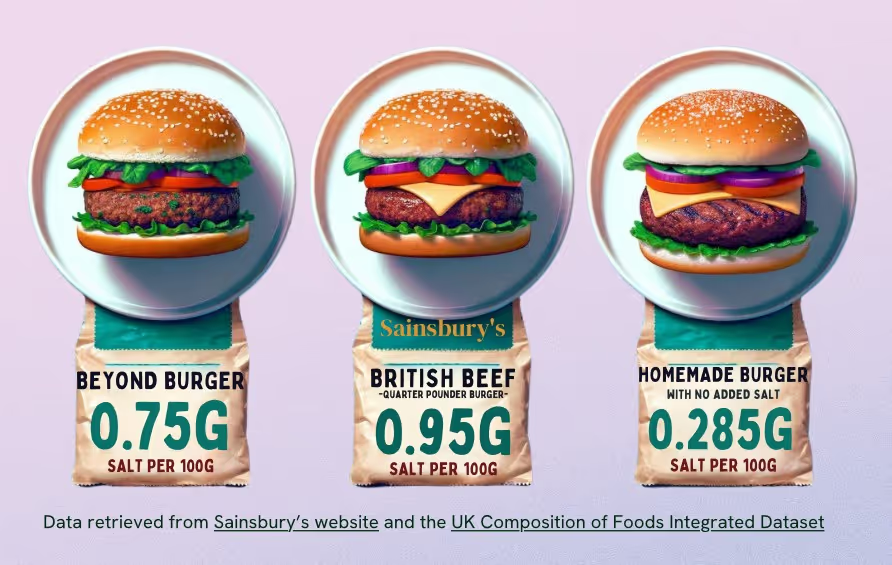
These findings do not support the claim that, on the basis of salt content, “a beef burger can be healthier than going vegan”, which compares a single product to an entire diet. If we look at the latter, studies have shown the benefits of plant-based diets to reduce blood pressure, which can be negatively affected by high salt intake. The bottom line here might be that processed products, whether they are animal-based or plant-based, tend to be higher in salt. To monitor salt intake, it is therefore important to consider one’s diet as a whole: how do we cook these products, what do we eat alongside them, and what is their proportion in our diet?
Final Take Away
The idea that “seemingly healthy” products are in fact bad for us is frequently expressed in the media. By making broad statements about the health implications of vegan diets, the article contributes to the broader narrative that plant-based foods are not as healthy as they appear. This could deter people from incorporating more plant-based products into their diet (beyond the occasional plant-based burger).
The comments section reflects a broader issue of distrust towards nutritional advice, with readers expressing skepticism about the seemingly ever-changing nature of dietary recommendations:
“So this week salt is bad for you, next week..…”
“According to the experts, everything is bad for us…”
This skepticism might be partly fueled by sensational statements which can often lack context.
Claim 2 : “Meat alternatives frequently contain high amounts of salt in an attempt to enhance flavour and make the alternative taste more like a genuine meat product.”
FACT-CHECK: As plant-based alternatives are becoming more popular, it’s natural to compare their nutritional value with that of the products they aim to replace. In this article, while attention is drawn to the salt content of plant-based meats, no comparison is offered with their meat counterparts.
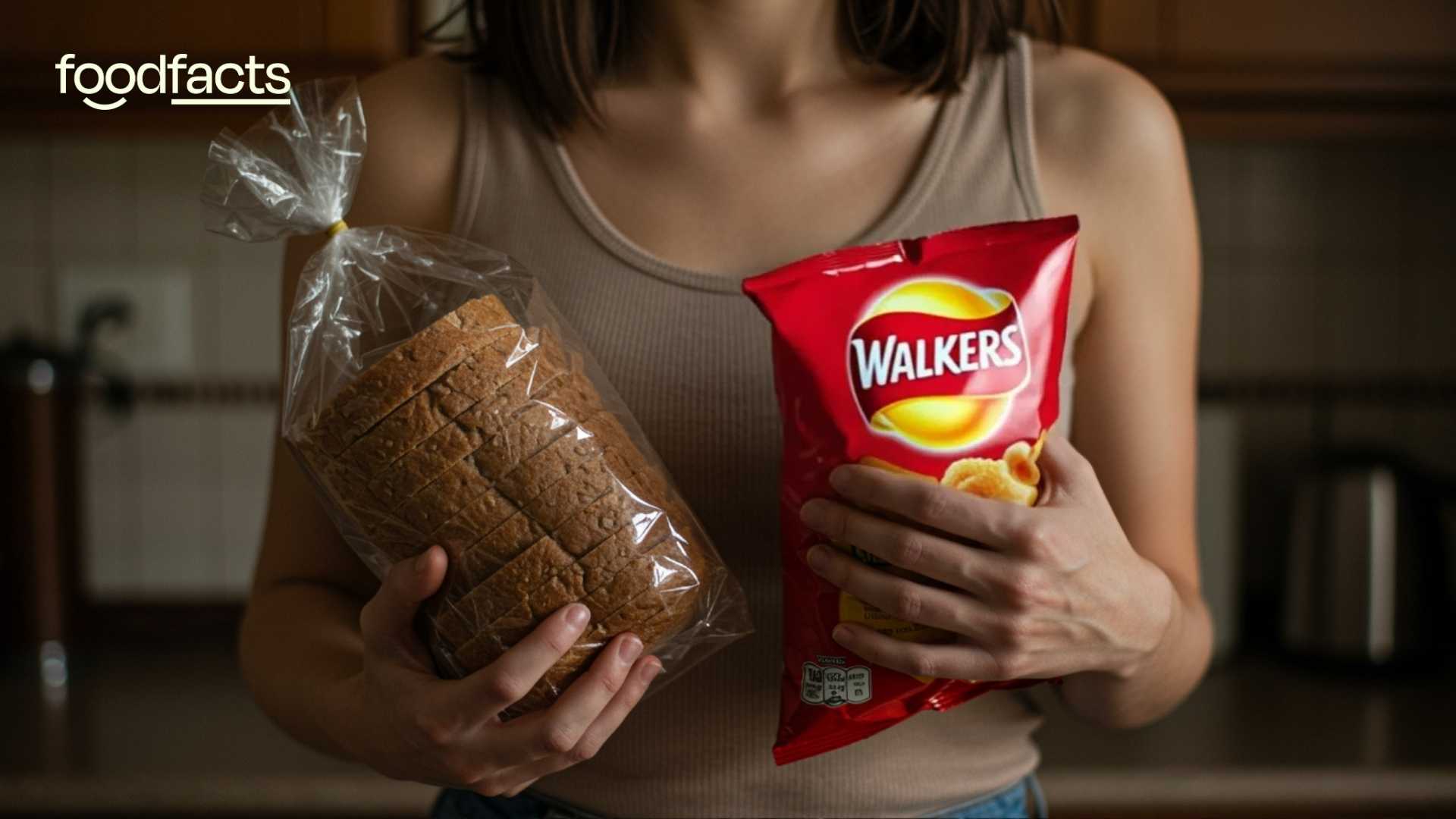
- Vegan Burgers vs. Beef Burgers: The first item on the list of everyday foods that contain more salt than a packet of salted crisps is the Vegan Burger. The reference used is a packet of Walkers Ready Salted Crisps, containing 0.44g of salt. By comparison, a Beyond Burger is reported as containing 0.75g of salt per 100 grams. While this is true, it doesn’t quite give us the full picture, as the salt content of beef burgers is not mentioned. Two comparisons are possible here. First, we could look at supermarket beef burgers, which are a popular choice due to their convenience and price. For example, Sainsbury's Quarter Pounder British Beef Burgers contain 0.95g of salt per 100 grams, 0.20g more than Beyond Burgers. The second comparison option is homemade beef burgers: according to the UK Composition of Foods Integrated Dataset, a homemade beef burger, when grilled, contains 0.285g of salt per 100g. It is also important to note that cooking methods can vary, as noted by a Stanford School of Medicine study on the health effects of plant-based meat compared to animal-based meat, which found no significant difference in overall sodium intake, or indeed in the participants’ blood pressure.
- Richmond Sausages: The article then compares the salt content of Richmond Meat Free sausages (1.3g for 2 sausages) and of packets of crisps, but it does not provide a direct comparison with their meat counterparts. When checked, two Richmond thick meat sausages contain 2g of salt, which, when adjusted for weight is still higher than the salt content in the meat-free version (1.9g and 1.5g/100 grams, respectively).
Claim 1: Even “seemingly healthy” bread loaves can be high in salt.
FACT-CHECK: This is true, although the claim lacks context. According to Action on Salt, a group that campaigns for the food industry to reduce unnecessarily high quantities of salt added to our foods, bread is the biggest source of salt we eat in the UK. This is not because bread is particularly salty, however, but rather because it is such a staple part of our diet. The example given here is that of one slice of Hovis Granary Wholemeal sliced bread, containing 0.46g of salt, which, as the journalist notes, is more than a packet of crisps. While this is true, and monitoring one’s salt intake is important, that slice of bread will also contain other nutrients such as fibre (3.2) or protein (5g). Depending on the loaf selected, other ingredients like seeds might also add to its nutritional value. Being aware of nutritional information can be empowering: it can help us make healthier choices (how often we might choose to consume bread; what loaf we choose; what we add to our sandwiches, etc.). However, broad categorizations and comparisons with packets of crisps might be more intimidating than empowering when they are not contextualized.
Beware of potential bias, which can lead to cherry-picking the data and distort the big picture.
In a Daily Mail article, published on 16th March and written by Zac Campbell, plant-based meat alternatives are criticised for containing too much salt. This high salt content is said to be due to attempts "to enhance flavour and make the alternative taste more like a genuine meat product." The article makes that claim, but without offering a comparison with beef burgers. While monitoring salt intake is important, we need data for both products to compare their nutritional profile. So what does the data say?
The misleading rating is mainly driven by the lack of balance provided by the article. The headline is particularly misleading, as the article is about salt content, not plant-based diets, with growing evidence showing that a healthful plant-based diet can provide benefits to reduce blood pressure and stroke risk factors.
We live in a fast-paced world where we can easily feel bombarded with information. It might then come as no surprise that in general, 80% of people do not read past headlines. That is why it is so important to be aware of their potential to distort our perception of popular issues, and even of what an article is about.
Comparing food products with packets of crisps can be helpful to draw attention to the prevalence of salt in our food. However, context is also needed to avoid growing feelings of fear and overwhelm when thinking about nutrition.

‘Going vegan destroys the environment’ says Fox News. Is there evidence of this?
4. CLAIM: “Soybeans are destroying the planet” through deforestation, soil erosion, and water usage.
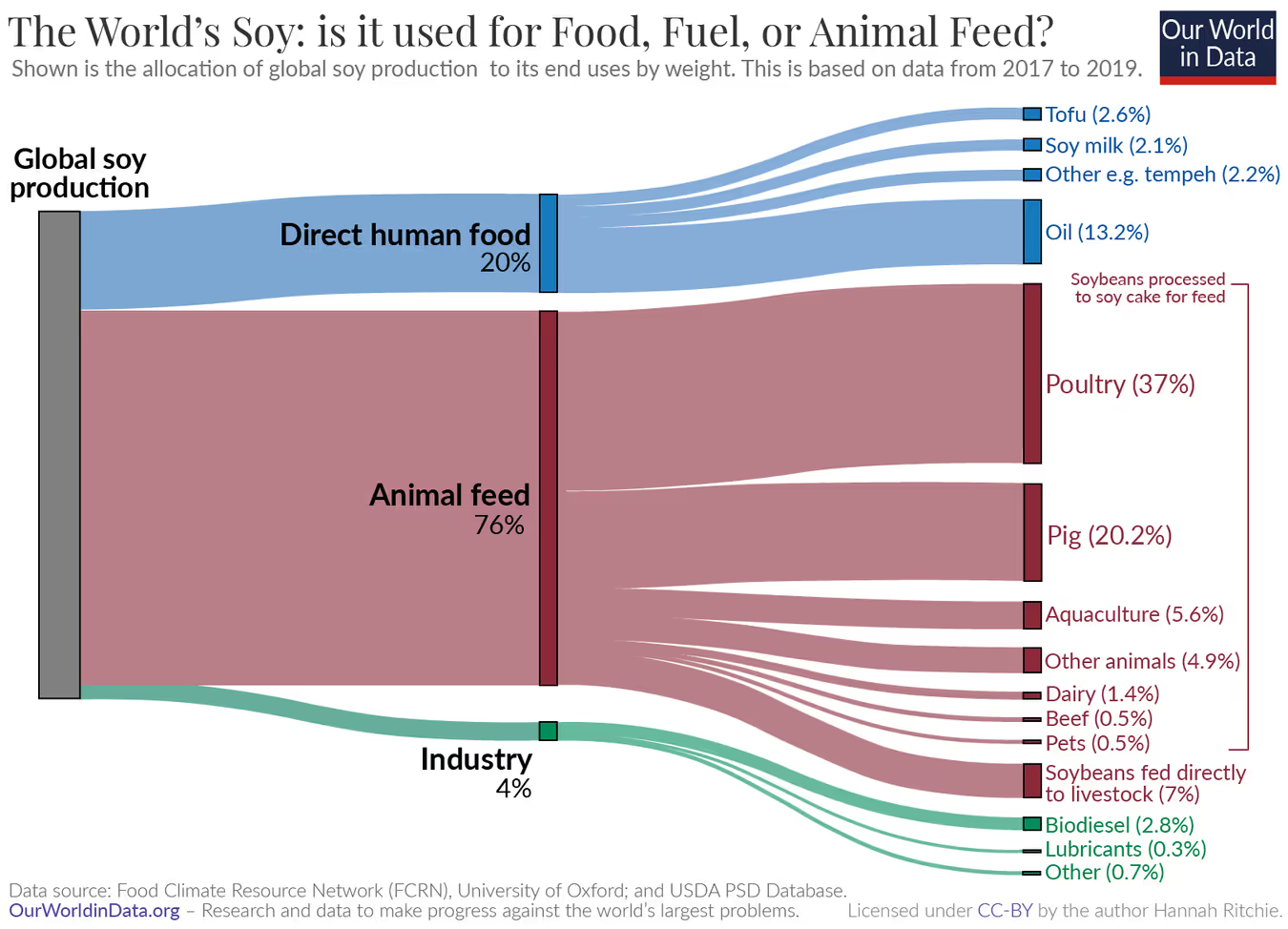
Fact Check: It is true that soybean farming has its environmental costs, but the details are far more nuanced than the author indicates. The article states that soy is so bad that “even the WWF, an environmental NGO, is against it.” However, this is what the WWF states: “Few of us are aware of how much soy we eat - because we tend to consume it indirectly. We may not eat large quantities of soy directly, but the animals we eat or from which we consume eggs or milk do. In fact, almost 80% of the world’s soybean crop is fed to livestock, especially for beef, chicken, egg and dairy production.” This is a typical example of the “cherry-picking fallacy”, where the bits of the ‘evidence’ which support an argument get selected, while the rest is left out. What the Fox News article fails to point out here is that most soybeans are not grown for direct human consumption. If, as Jason Reed suggests, one wants to reduce their consumption of soy, and if the majority of soybean production is used for animal feed, then reducing meat consumption would be an efficient way to mitigate these environmental issues.
5. CLAIM: Meat substitutes, such as tofu and tempeh, made from soybeans are environmentally damaging.
Fact Check: Meat substitutes made from soybeans generally have a lower environmental footprint compared to their animal-based counterparts. For example, research indicates that protein from tofu (soybeans) is much more resource-efficient than from beef or eggs. It requires 74 times less land and 8 times less water than beef, with 25 times lower greenhouse gas emissions and eutrophication potential (a process where water bodies become overly enriched with nutrients, leading to excessive algae growth and water quality degradation) is reduced by 39 times. Compared to eggs, tofu production needs three times less land, six times less water, halves the greenhouse gas emissions, and lowers eutrophication potential by five times.
Additionally, there are a variety of plant-based protein sources beyond soy, such as legumes, nuts, and seeds, which can provide the necessary protein in a plant-based diet without relying solely on soybeans. A huge body of research shows the environmental benefits of switching from animal-based diets to those rich in either whole plant foods or incorporating processed plant-based alternatives; in a recent analysis, these types of plant-based diets substantially reduce greenhouse gas emissions by 30–52%, land use by 20–45%, and freshwater use by 14–27%.
6. CLAIM: Plant-based milk alternatives like almond, coconut, oat, rice, and soy milk have disastrous environmental consequences.
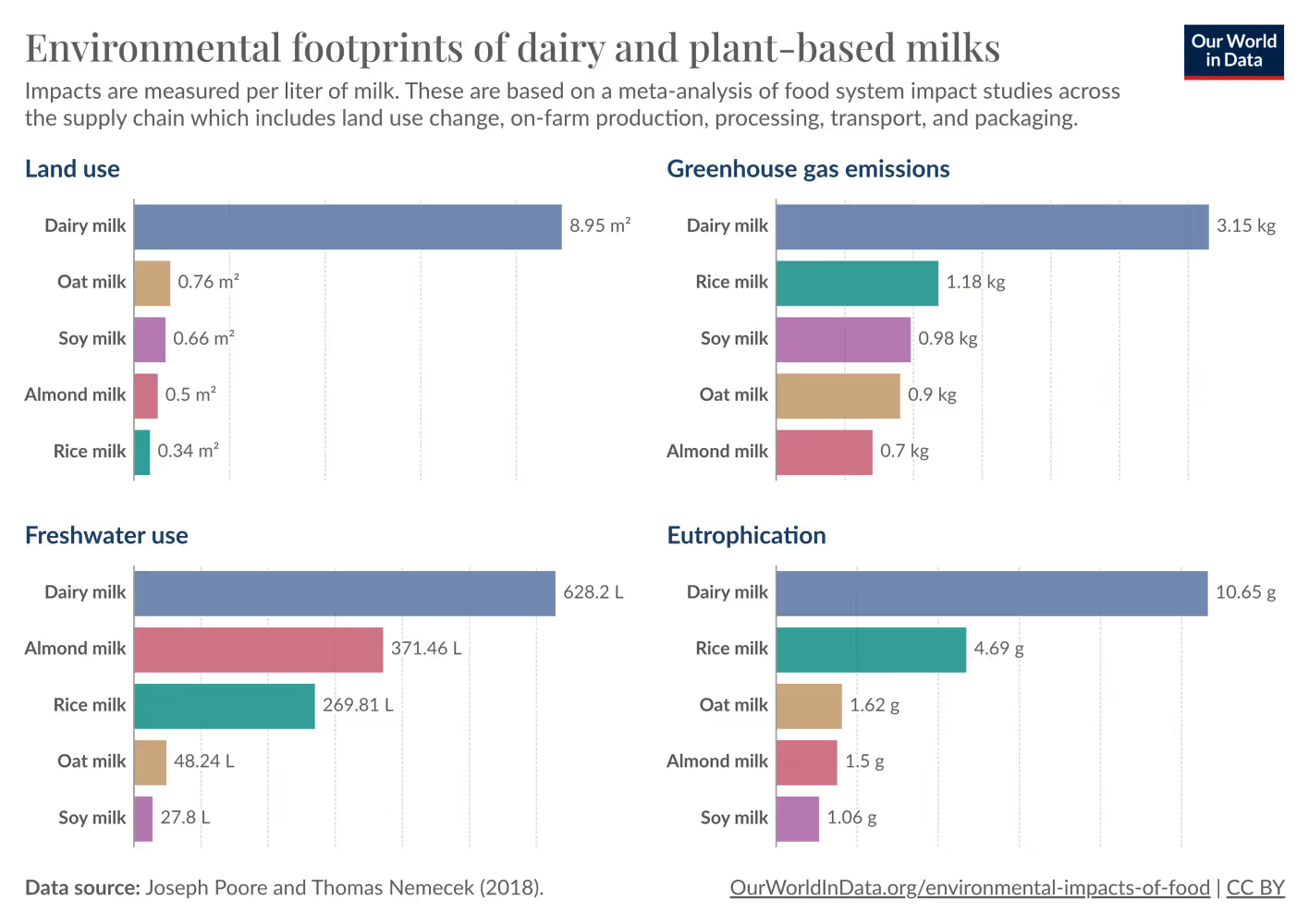
Fact Check: Plant-based milk options have a much lower environmental footprint compared to dairy milk. Research from 2018, published in the journal Science, shows that all plant-based milk options have a lower impact than dairy across all metrics. Compared to plant-based alternatives, cow’s milk causes around three times as much greenhouse gas emissions, uses around ten times as much land, two to twenty times as much freshwater, and creates much higher levels of eutrophication.
7. Claim: Millennials and Gen Z who adopt a plant-based diet have been duped by the eco-food industry.
Fact Check: The shift towards plant-based diets among younger generations is driven by various factors, including concerns about animal welfare, health, and the environment. This type of language reduces the younger generations to people who can’t think for themselves when in reality, many people choose these dietary choices based on critical thinking skills and intelligent reasoning. To suggest that they have been ‘duped’ by the industry undermines a generation who want to see change in our food system. Choosing plant-based options can align with ethical and environmental values without being solely influenced by marketing tactics.
In Conclusion
Here is our final review for this article:
Misleading ⭐️⭐️⭐️⭐️
Factuality ⭐️
Balance
Clarity ⭐️⭐️⭐️
The article presents conclusions on plant-based diets and their environmental impacts that do not align with scientific evidence, and at best are misleading and at worst, inaccurate. Additionally, articles like these undermine the urgent need for evidence-based discourse.
To address concerns about soybean farming or other environmental challenges, promoting sustainable dietary choices is crucial. This includes reducing reliance on animal products, mitigating environmental strain and aligning with ethical and health considerations.
2. CLAIM: “By giving up meat, [you] might actually be harming the planet.”
Fact Check: Studies consistently show that a plant-based diet has a significantly lower carbon footprint compared to a diet rich in animal products. The meat and dairy industries are major contributors to greenhouse gas emissions, deforestation, and water pollution; a recent analysis by the University of Oxford found that vegan diets have just 30% of the environmental impact of high-meat diets.
3. CLAIM: “Meat, eggs, and dairy are all top sources of protein.”
Fact Check: It is true that meat, eggs, and dairy all provide protein. The implication of this statement is that animal sources of protein, like meat and eggs, are superior. This is a widely shared assumption which stems from the fact that animal proteins are considered complete proteins, meaning they contain all nine essential amino acids needed by the body. However, the implication that this makes animal protein superior is misleading, because it overlooks important aspects of research on protein sources and health outcomes. For example, research indicates diets high in plant protein are associated with better health outcomes than animal protein, such as healthier ageing in women, and reduced risk of metabolic syndrome. The source of protein and the method of preparation are also important factors. Red and processed meats are associated with an increased risk of several cancers, heart disease, and all-cause mortality. The article suggests that a diet without animal foods is limited to “beans at every meal.” However, nutritionists conclude that there is a wide variety of protein-rich plant foods to choose from to meet nutritional needs.
1. CLAIM: "Never before have millions of people become herbivores.”
Fact Check: This statement is not supported by recent findings; new evidence from archaeologists shows that some early human hunter-gatherers ate mostly plants and vegetables, undermining the commonly held view that all our ancestors followed meat-heavy diets.
In the past, millions of people ate plant-based diets around the world, particularly in South Asia. Ancient Vedic texts encourage people to avoid animal foods. More generally, humans, for most of our history, lived on mostly plant diets. Never before have humans eaten this much animal food.
This is truly a shameful moment for research in mainstream news that a lot of Americans consume.
The reasons [plant-based proteins are associated with better health] are likely due to the healthier nutrient packaging of plant sources of protein, which results in better cardiometabolic health and lower levels of inflammation.
Check the source: Always verify the source of the information. In this case, by checking the WWF's website (quoted in the Fox News article), we quickly notice that only one part of the information on soy was selected to support a narrative.
In a media article published by Fox News on 6 February 2024, Jason Reed makes claims about the effects of plant-based foods on the environment. This analysis seeks to review these claims against current research findings and includes insights from experts in the field.
Scientific evidence shows plant-based diets have a much lower environmental footprint than meat-heavy diets, with reduced emissions, water, and land use, and that most soy is used for animal feed, not human consumption.
While acknowledging that all food production has some environmental cost, it's crucial to address the inaccuracies propagated by the article. Misinformation harms public health and delays necessary behaviour change to protect planetary health, here by making the adoption of a plant-based diet seem trivial and uninformed.
Latest fact-checks, guides & opinion pieces









.svg)

